Most people reach Bhimashankar by road, step out of a vehicle and walk into the temple. Walking up to it instead - through six or seven hours of forest from the valley below - turns a darshan into something closer to a pilgrimage, which is what it was for centuries before the road existed.
Bhimashankar is one of the twelve Jyotirlingas, the self-manifested shrines of Shiva spread across India. It sits in the Sahyadri in Pune district, inside a wildlife sanctuary, and it is the source of the Bhima river.
The two routes up
Ganesh Ghat - the route we take
Ganesh Ghat starts from Khandas village near Karjat and climbs steadily through dense forest. It is longer than the alternative but entirely walkable - no ladders, no technical sections - and takes most groups about five hours up. A small Ganesh temple partway gives the route its name.
This is the route we run, and the only sensible one in the monsoon.
Shidi Ghat - the ladder route
Shidi Ghat climbs the same face more directly using a series of fixed iron ladders bolted to the rock. It is shorter and considerably more exposed, and in the rains the ladders are wet and the rock above them is slick. Experienced trekkers use it in the dry season; we do not take mixed groups up it.
What the walk is like
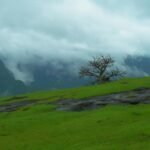
The first stretch out of Khandas is easy going through farmland and scrub. Once the trail enters the sanctuary it turns into continuous forest - stream crossings, mossy rock, and in the monsoon, leeches. The gradient is steady rather than brutal, but it does not let up for long.
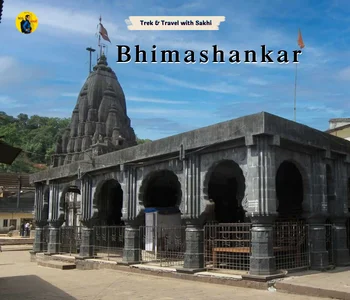
The forest opens near the top onto the plateau, and the temple village appears almost without warning. The Bhimashankar temple itself is a modest stone structure in the Nagara style, far smaller than its importance suggests.
The wildlife sanctuary
The whole upper half of the trail lies inside the Bhimashankar Wildlife Sanctuary, protected largely for the Indian giant squirrel - the Shekru, which is the state animal of Maharashtra. It is a genuinely large animal, rust-coloured, and it moves through the canopy rather than on the ground. Walk quietly in the forest sections and you have a fair chance of seeing one.
Because it is a sanctuary, the usual rules apply with more force than elsewhere: no plastic left behind, no loud music, no straying off the trail.
Difficulty and timings
- Grade: moderate to hard - not technical, but long and sustained
- Ascent via Ganesh Ghat: roughly 5 hours
- Base village: Khandas, near Karjat, Raigad district
- Who it suits: trekkers with a few moderate forts behind them; not a first trek
Our batches start before dawn from Khandas so the hardest climbing is done before the day heats up.
Best time to do the Bhimashankar trek
Late monsoon and just after - August to October - is the best window. The forest is at its densest, streams are running, and the temperature on the climb is manageable. Winter is comfortable and clear but the forest is quieter. Summer is a hard, dry climb and we generally avoid it.
How to reach
From Mumbai, Khandas is reached via Karjat on the Central Railway, then a short road transfer to the base. From Pune, the usual approach is by road via Rajgurunagar. Our batches include transport from the listed pickup points in both cities.
If you only want darshan and not the climb, Bhimashankar is reachable by road all the way to the temple village - but you will miss the part that makes it worth the trip.
Combining the trek with darshan
Most of our group walks straight into the temple after reaching the top. Queues are short on weekdays and in the off season, and considerably longer on Mahashivratri and through Shravan, when Bhimashankar sees large pilgrim crowds. If your reason for going is the shrine rather than the forest, plan for a weekday.
Bhimashankar sits almost equidistant from both cities - about 110 km from Mumbai and 125 km from Pune. Compare it with the alternatives on treks near Mumbai and treks near Pune.
Frequently asked questions
Is Bhimashankar one of the twelve Jyotirlingas?
Yes. Bhimashankar is one of the twelve Jyotirlinga shrines of Shiva, and it is also the source of the Bhima river.
Which route is better, Ganesh Ghat or Shidi Ghat?
Ganesh Ghat for almost everyone - longer but walkable, with no ladders. Shidi Ghat is shorter and uses fixed iron ladders on an exposed face; it suits experienced trekkers in dry conditions only.
How long does the Bhimashankar trek take?
About five hours up via Ganesh Ghat, plus time at the temple. With the descent or the road transfer down, it is a full day from before dawn to evening.
Is the Bhimashankar trek suitable for beginners?
Not as a first trek. It is a long, sustained climb. Do two or three moderate forts first - Karnala, Sarasgad or Mahuli - and then come to this one.
Can I see the Shekru (giant squirrel)?
Often, yes. The sanctuary exists largely to protect it. Walk quietly through the forest sections and look up rather than ahead.
Are there leeches on the Bhimashankar trail?
In the monsoon, yes, and more than on most trails. They are harmless. Rub salt on your shoes and socks before the forest section.
Can I reach Bhimashankar without trekking?
Yes - a motorable road goes to the temple village. The trek is the experience; the road is the shortcut.
Walk it with us
Our Bhimashankar batches run via Ganesh Ghat with transport from Mumbai and Pune, breakfast, lunch, certified trek leaders and first-aid support. Dates and prices are on the Bhimashankar Trek page, and all our departures are listed on the upcoming treks page.