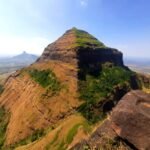
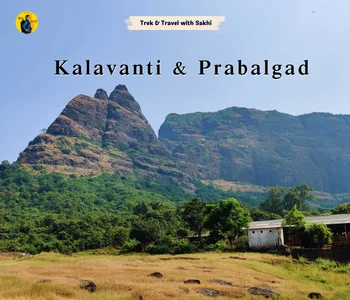
Few images say "Sahyadri" quite as loudly as the staircase of Kalavantin Durg - a flight of steps cut straight into a rock pinnacle with nothing but air on one side. It stands above Panvel beside the broader fortress of Prabalgad, and the two are usually climbed together from the same base.
The story of the two forts
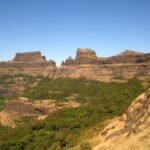
Prabalgad was originally Muranjan, a Bahmani fort that Chhatrapati Shivaji Maharaj captured and renamed. It sat on the route between the Konkan ports and the Deccan plateau, and its plateau once held a small settlement. Kalavantin Durg beside it is the stranger of the pair - a near-vertical thumb of rock with steps carved into it and very little on top. Local tradition holds it was built for a queen, which is where the name comes from, though the records are thin.
The route from Thakurwadi
The trail starts at Thakurwadi, the village below Prabalmachi, reached by road from Shedung Phata on the old Mumbai-Pune highway. The first stretch is a steady climb through forest and stone steps, taking around two hours to Prabalmachi - the saddle both forts share, with a hamlet and a few houses that serve tea. From the machi the routes split: Kalavantin's staircase rises directly, while Prabalgad needs a scramble along a rocky traverse.
What the staircase is actually like
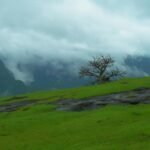
This is the part worth being honest about. The steps are cut into open rock, they are worn smooth in places, and there is no railing. On a dry day with good shoes and a steady head it is a manageable climb. In the monsoon, with moss and running water on the rock, it is genuinely dangerous - people have died here. Anyone climbing it should do so with a group that carries rope, and the final pinnacle should be skipped whenever the rock is wet or the group is not comfortable.
On top, and across at Prabalgad
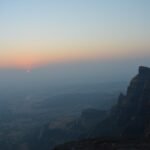
The Kalavantin summit is small - room for a handful of people, a shrine, and a view that runs from Matheran across to Irshalgad, Karnala and Chanderi, with the Mumbai skyline on the horizon on a clear winter morning. Prabalgad is the opposite: a wide plateau of ruined ramparts, water cisterns and the remains of the old settlement, overgrown and quiet.
When to go
October to February. The rock is dry, the air is clear and the views carry. Avoid the monsoon for the pinnacle entirely - the machi and Prabalgad are still walkable in the rain, but the staircase is not worth the risk.
What to carry
Shoes with a real grip, three litres of water, electrolytes, a cap and sunscreen, and gloves if you have them. Keep the bag small and nothing dangling. There is water and tea at Prabalmachi but nothing above it.
Trek it with us
With Sakhi runs this as a guided one day trek from Mumbai and Pune, with rope support on the exposed section. See the trek details and dates.